
About us
Working together for stronger communities
Our Mission
To partner with communities and institutions to design and implement sustainable development initiatives that improve livelihoods, strengthen resilience, promote social inclusion, and protect the environment through community participation, innovation, and collaborative partnerships.
Our Vision
To see communities being holistically transformed primarily by the committed efforts of men and women and challenged to be within their area of influence.
Organizational Philosophy
HIMserve believes every person has inherent dignity, potential, and the ability to create positive change. We work alongside people to identify their priorities, build on their strengths, and lead their own transformation. Through practical care, inclusive participation, and collaborative partnerships, we foster lasting, equitable, and sustainable community transformation.
A brief history
Our story
1998
Work began in Siliguri under Ms. Anne Herr, invited by founder Dr. Cindy Perry. The early Community Development Project showed the need to equip local leaders, volunteers, and community groups to respond to local needs.
2003
Registered under the West Bengal Societies Act.
2008–09
All independent programs unified into a single team focused on holistic, sustainable community transformation — physical, emotional, social, and economic wellbeing.
Today
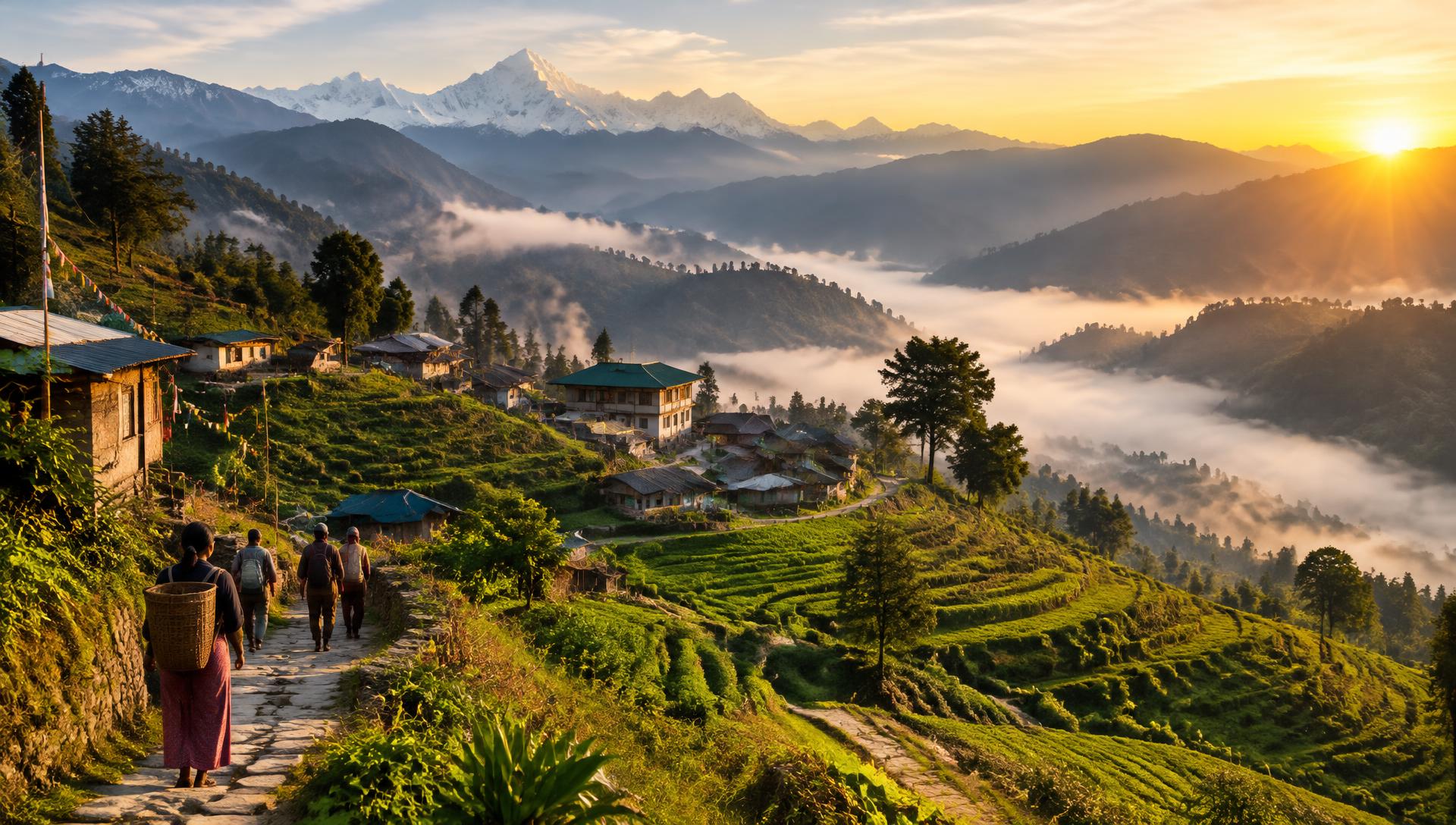
HIMserve works across the Darjeeling Hills, Kalimpong, Dooars, Terai, and Northeast India, partnering with diverse communities to promote holistic development and positively impacting over 100,000 people.
Our core values
Dignity, inclusion and care in action
Integrity
We uphold the highest standards of honesty, ethics, and professionalism.
Accountability
We are responsible to the communities we serve, our partners, and our supporters through transparent and accountable practices.
Inclusion
We value diversity and promote equal participation regardless of gender, age, disability, ethnicity, religion, or socio-economic background.
Respect for Human Dignity
Every person deserves to be treated with dignity, respect, and fairness.
Collaboration
We believe sustainable development is achieved through strong partnerships and shared responsibility.
Innovation
We encourage learning, creativity, and adaptive solutions to complex development challenges.
Sustainability
We design programmes that strengthen local ownership and create long-term impact.
Excellence
We strive for quality, continuous improvement, and measurable results in all that we do.
Our goals
Communities equipped to shape their futures
Holistic Transformation
Address emotional, physical, and social well-being through community-led development.
Self-Sufficiency
Improve living conditions through capacity building and sustainable development practices.
Quality Education
Ensure children have access to quality education and holistic care.
Center of Excellence
Create a hub for innovation, training, and resources that equips local leaders to drive change.
Gender Equality
Promote women's empowerment and equitable opportunities for growth and leadership.
Community Resilience
Strengthen preventive health, sustainable agriculture, and anti-trafficking initiatives.
Self-Sustaining Communities
Build strong communities grounded in integrity, humility, and shared responsibility.
Ten ways we Serve
Wholistic Leadership Development
Community Health & Rural Clinics
Child and Adolescent Development
Inclusive Education & Capacity Building
Disability-Inclusive Development
Anti-Human Trafficking Response
Teen Mothers & Women's Empowerment
Skill Development & Livelihood
Environmental Stewardship & Agroforestry
Gender Equality & Social Justice
Executive snapshot · FY 2023–2026
A year of collective action
Strengthened communities and measurable impact across the Eastern Himalayan Region.
Who we reached
1,063+
Total beneficiaries
63% Female37% Male
599
Adults reached
232
Children reached
Financial snapshot (FY 2024–2025)
Total expenditure ₹ 2.68 Cr
Programme Activities78% · ₹ 2.09 Cr
Livelihood & Agriculture32% · ₹ 0.86 Cr
Health & Nutrition16% · ₹ 0.43 Cr
Capacity Building10% · ₹ 0.27 Cr
Administration7% · ₹ 0.19 Cr
Our programme areas
Community Leadership
Women Empowerment
Youth Development
Sustainable Agriculture
Livestock Development
Health & Nutrition
Environment & Climate Resilience
Key achievements
- Strengthened community institutions and local leadership
- Empowered women through SHGs, savings and livelihoods
- Engaged youth as change makers in their communities
- Promoted climate-smart and sustainable agriculture
- Improved health awareness and wellbeing practices
- Enhanced livestock productivity and household income
- Built resilience to climate and environmental challenges
Stories of change
Avantika Sherpa
From Kitchen Garden to Nutritious Living
Avantika transformed her small kitchen garden into a year-round source of fresh vegetables. Her family's diet has improved and she now sells the surplus in the local market.
More vegetablesBetter nutritionExtra income
Georgina Lepcha
From Banana Plantation to Steady Income
With support and training, Georgina established a banana plantation. Her income has increased and she is able to support her family with confidence.
Higher incomeFamily stabilityCommunity role model
Sancharani Subba
From Waste to Wealth with Vermicompost
Sancharani turned organic waste into high-quality vermicompost. Her farm productivity improved and she now earns additional income by selling compost.
Soil healthBetter yieldsSustainable income
Looking ahead
Scale sustainable livelihoods
Empower more women and youth
Strengthen community health
Build climate resilient and green communities
Expand partnerships for greater impact
“When communities are empowered with knowledge, opportunity and collective action, they create lasting change for generations to come.”
Our approach
Aligned with the UN Sustainable Development Goals
Every programme we run contributes to global goals while staying rooted in local leadership and community ownership.
1No Poverty2Zero Hunger3Good Health & Well-Being4Quality Education5Gender Equality13Climate Action14Life Below Water15Life on Land17Partnerships for the Goals
Key areas of transformation
Community Leadership
- Ethical leadership
- Local governance
- Volunteer development
- Community participation
Sustainable Livelihoods
- Organic agriculture
- Skill development
- Entrepreneurship
- Financial literacy
- Employment opportunities
Health & Wellbeing
- Preventive healthcare
- Nutrition
- Mental wellbeing
- Clean water & sanitation
- Healthy lifestyles
Women & Youth Empowerment
- Leadership opportunities
- Gender equality
- Youth engagement
- Child protection
- Anti-trafficking awareness
Education & Life Skills
- Literacy
- Digital education
- Vocational training
- Life skills
- Leadership development
Environment & Climate Resilience
- Tree plantation
- Waste management
- Water conservation
- Biodiversity protection
- Climate-smart agriculture
Social Harmony
- Community dialogue
- Peacebuilding
- Inclusion
- Conflict resolution
- Volunteerism
Disaster Risk Reduction
- Community preparedness
- Emergency response planning
- First aid
- Local disaster management teams
Our strategy — a 7-step approach
- 1
Inspire Communities
Awareness meetings, vision sharing, community mobilization
- 2
Build Local Leadership
Leadership training, Training of Trainers (TOT), community facilitation
- 3
Understand Community Needs
Village mapping, baseline surveys, resource assessment, consultations
- 4
Develop Community Action Plans
Identify priorities, resources, local solutions and responsibilities
- 5
Implement Practical Solutions
Projects based on local needs and available resources
- 6
Monitor Progress
Regular review, measure impact, learn and improve
- 7
Replicate Success
Successful villages mentor another village and create a network
Guiding principles
Community Ownership
Inclusiveness
Participation
Transparency & Accountability
Sustainability
Gender Equity
Partnership & Collaboration
Innovation
Respect for All Diversity
Local Resource Mobilization
Where we work
Across the Eastern Himalayan belt
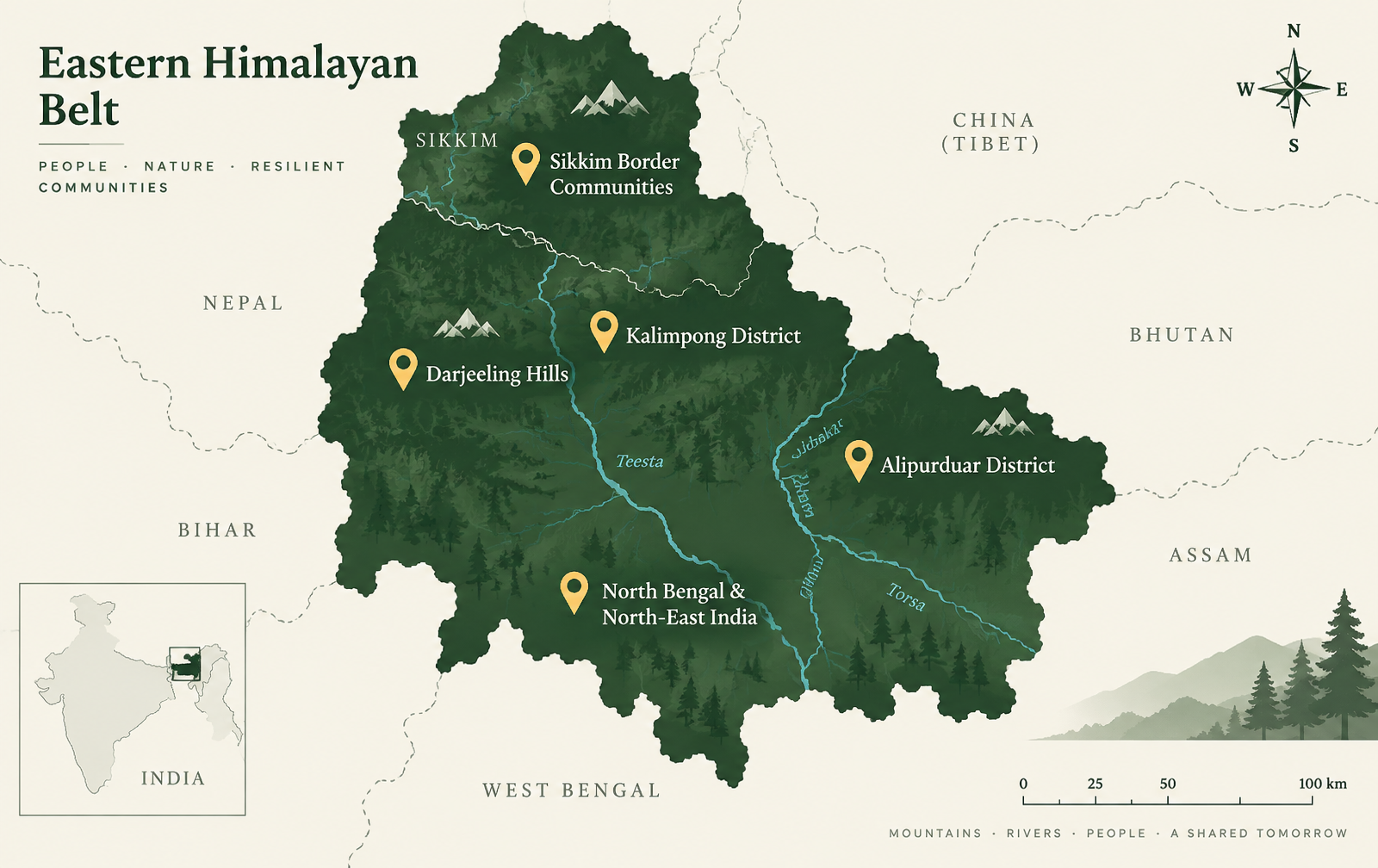
- Kalimpong District
- Darjeeling Hills
- Alipurduar District
- Border communities of Sikkim
- North Bengal & North-East India